Your Brain on Piano: The Science That Blows Up Everything You Thought You Knew About Practice
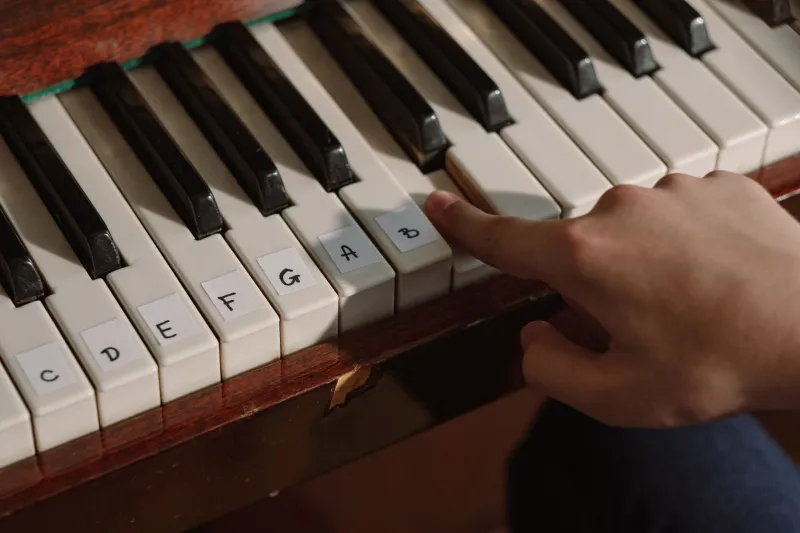
Ask any piano student what makes a difficult passage finally click, and they'll almost always say the same thing: muscle memory. It's one of those phrases that gets tossed around in studios from New York to Nashville like it explains everything. Practice enough, the logic goes, and your fingers will just know what to do.
There's only one problem. Neuroscientists say that's not really how it works.
"Muscles don't have memory," says Dr. Caroline Wen, a cognitive neuroscientist who studies motor skill acquisition at a research university in the Pacific Northwest. "What people call muscle memory is entirely a brain phenomenon. The muscles themselves are just executing instructions. The encoding, the storage, the retrieval — that's all happening in your nervous system."
So what does that mean for the pianist sitting at the bench, trying to nail a Beethoven sonata? Quite a lot, actually.
What's Really Happening When You "Memorize" a Passage
When you repeat a piano passage over and over, your brain is doing something remarkable. It's building and reinforcing neural pathways — specifically in the motor cortex, the cerebellum, and the basal ganglia. Each repetition strengthens the connections between neurons that fire in sequence, making the pattern easier and faster to execute over time.
This process is called procedural memory consolidation, and it's fundamentally different from the kind of memory you use to remember a phone number or a friend's birthday. It's implicit rather than explicit, meaning it operates largely below conscious awareness. That's why experienced pianists can hold a conversation while playing a familiar piece — the brain has automated the motor sequence to the point where it barely needs conscious oversight.
But here's where things get interesting, and where the "just keep repeating it" approach starts to fall apart.
Why Mindless Repetition Can Actually Work Against You
There's a persistent belief in music education that sheer repetition is the path to mastery. Log enough hours, run the passage enough times, and it'll stick. But research in motor learning tells a more complicated story.
"Repetition without variation can actually create a ceiling," explains Dr. Marcus Tillman, a music cognition researcher based in Chicago who consults with piano pedagogy programs. "When you repeat something identically over and over, you're not challenging the neural system to adapt. You're just reinforcing one very specific motor pattern under one very specific set of conditions."
The problem shows up during performance. You've practiced the passage at home, at your tempo, on your piano, at your usual practice time. Then you sit down at a different instrument in a recital hall under bright lights with an audience watching — and suddenly the "muscle memory" fails you. The neural pattern you encoded was too narrow, too context-dependent to generalize.
This is why neuroscience researchers advocate for something called variable practice — deliberately changing the conditions of repetition. Play the passage at different tempos. Start from different points in the phrase. Practice it piano when you've been working on it forte. This variability forces the brain to build a more flexible, robust representation of the skill rather than a single rigid pathway.
The Role of Sleep (And Why You Shouldn't Skip It)
One of the most striking findings in motor learning research is how much happens when you're not practicing at all.
Studies consistently show that skills consolidate during sleep. Specifically, a process called offline consolidation occurs during slow-wave and REM sleep, during which the brain essentially replays and stabilizes the motor sequences learned during waking hours. In practical terms, this means a student who practices for 45 minutes and then sleeps well may outperform one who grinds through a three-hour session on no rest.
"The brain needs downtime to do its filing," says Dr. Wen. "If you're a student cramming practice sessions together without adequate sleep, you're actually interfering with the consolidation process. You're making it harder for the learning to stick."
For American students juggling school, jobs, and packed schedules, this is genuinely liberating news. Shorter, focused practice sessions followed by real rest may be more productive than marathon sessions fueled by caffeine and guilt.
What Piano Teachers Are Getting Right — And Wrong
None of this means traditional piano pedagogy is broken. Many of the techniques experienced teachers rely on — hands-separate practice, slow practice, chunking difficult passages — align well with what neuroscience tells us about skill acquisition.
Slowing down, for instance, isn't just about accuracy. It gives the brain more processing time to encode the correct sequence of movements before errors get baked in. "If you practice a mistake repeatedly, you're memorizing the mistake," says Tillman. "The brain doesn't distinguish between correct and incorrect — it just strengthens whatever you repeat."
Where some traditional approaches fall short is in the emphasis on rote repetition over deliberate practice — a concept popularized by researcher Anders Ericsson that emphasizes focused attention, immediate feedback, and working at the edge of your current ability rather than cruising through what you already know.
Playing through a piece from start to finish, for example, feels productive but often isn't. You're spending most of your time on sections you already play well and briefly touching the hard parts before moving on. Effective practice, neurologically speaking, means identifying the specific moments where your performance breaks down and targeting those with concentrated, effortful repetition.
Practical Takeaways for Your Practice Routine
So what does all of this mean for how you actually sit down and work on a piece? A few evidence-based adjustments can make a real difference:
Practice in shorter, more focused blocks. Forty-five minutes of genuine concentration beats two hours of distracted noodling. Give your brain time to consolidate between sessions.
Vary your practice conditions. Change the tempo, the starting point, the dynamics. Build a flexible neural representation rather than a single brittle one.
Prioritize sleep. Seriously. This isn't optional. The brain does real learning work while you're unconscious.
Target your weaknesses. Identify the exact measures that give you trouble and work those specifically. Don't reward yourself with easy run-throughs before doing the hard stuff.
Practice slowly enough to play correctly. The brain encodes what you repeat. Encoding errors is just as easy as encoding correct movements — and a lot harder to undo.
The Bigger Picture
Understanding the neuroscience behind piano learning doesn't make the work easier, but it does make it smarter. The brain is an extraordinarily adaptable organ, and it wants to learn — but it learns best when you work with its actual mechanics rather than against them.
So the next time someone tells you to just keep repeating that passage until your muscles remember it, you can smile politely and know the real story. It's not your muscles doing the remembering. It never was. It's 86 billion neurons firing in increasingly elegant coordination, building something that, with the right practice habits, can last a lifetime.