Hammers, Strings, and Authenticity: How Gen Z Fell Head Over Heels for the Acoustic Piano
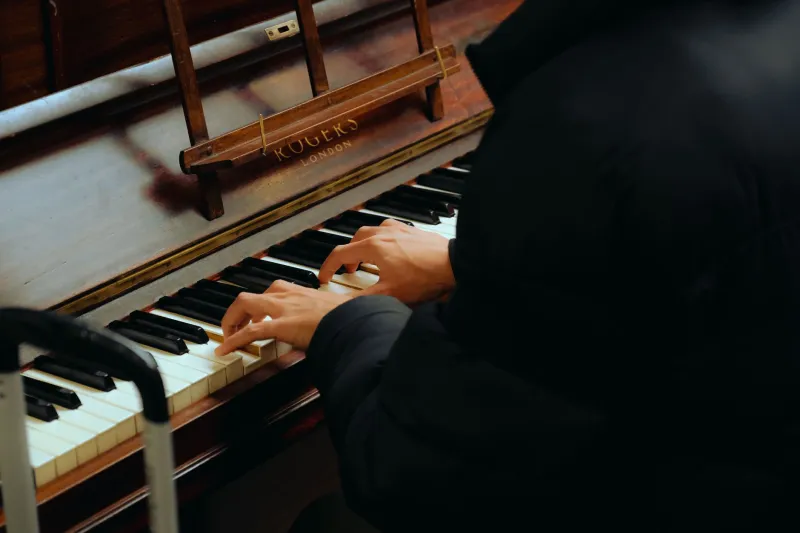
Walk into almost any piano retailer in the country right now and you'll notice something unexpected: the customers aren't all retirees or suburban parents dragging reluctant kids through the door. A lot of them are in their early twenties. Some have AirPods around their necks. A few are filming TikToks between trying out instruments. And a surprising number of them are pulling out their wallets for a full-size acoustic piano.
Something real is happening here, and it's worth unpacking.
The Screen Fatigue Factor
Let's start with the obvious. Gen Z grew up more digitally saturated than any generation before them — smartphones from middle school, social media algorithms before high school, remote learning and Zoom calls through college. For a lot of young people, the appeal of something physical and analog isn't nostalgia. It's relief.
"I spend eight hours a day staring at a monitor for work," says Marcus, a 24-year-old software developer in Austin who recently bought a used Kawai upright. "When I sit down at the piano, there's no notification, no refresh button. It's just me and the instrument. That feels radical right now."
Music educators are hearing this kind of thing constantly. "I've had more new adult students in their twenties over the past two or three years than in the decade before that combined," says one piano teacher in Chicago who runs a small studio out of her apartment. "And they're almost all saying the same thing — they want something that feels real."
That word keeps coming up. Real. As in tactile, imperfect, physical. An acoustic piano pushes back. The keys have weight. The sound fills a room in a way no speaker system quite replicates. You can feel the vibrations in your chest if you play loud enough. That's an experience no app can fake.
Grandma's Piano Gets a Second Look
One of the more interesting angles in this trend is the family heirloom effect. A lot of young Americans are rediscovering acoustic pianos that have been sitting in their parents' or grandparents' homes for decades — often ignored, occasionally tuned, always present in the background of holiday gatherings.
For many Gen Z players, picking up the piano isn't starting from scratch. It's reconnecting with something they grew up around but never took seriously. There's an emotional thread there that digital instruments simply can't replicate. Your grandmother's Steinway upright carries a story. A Roland digital piano, however excellent, doesn't.
"I started playing on the piano my great-aunt left us," says Priya, a 22-year-old in Atlanta who began lessons during the pandemic and hasn't stopped. "There's something about knowing she played on the same keys. It makes me want to practice more, honestly."
Retailers are also seeing a spike in younger buyers asking specifically about used and vintage acoustic instruments — not because they're cheap (though that helps), but because they want something with character. A piano that's lived a little.
The Social Media Paradox
Here's where things get interesting. The very platforms that contribute to digital overload are also driving the acoustic piano renaissance in a big way. Piano content on TikTok and YouTube is genuinely massive. Videos of people playing everything from Debussy to pop arrangements at upright and grand pianos rack up millions of views. Pianists like Rousseau, Nahre Sol, and countless smaller creators have built enormous audiences just by sitting down and playing — often on acoustic instruments with gorgeous, resonant sound.
The visual and sonic appeal of an acoustic piano is undeniable on camera. The hammers moving, the strings vibrating, the natural reverb of a wooden cabinet — it photographs and films beautifully in a way that a sleek digital keyboard often doesn't. So in a kind of delicious irony, social media is making acoustic pianos look and sound aspirational to an entire generation.
"I found piano through YouTube," admits Jordan, a 19-year-old college student in Portland who convinced his parents to move their old Yamaha upright out of storage. "I watched someone play a Chopin nocturne and I literally couldn't stop thinking about it. I wanted to be able to do that. And I wanted that sound — not a digital version of it."
How This Differs From Previous Generational Trends
Every generation has its instrument moment. Baby Boomers had the electric guitar. Millennials had the DJ setup and the bedroom producer phase. But the Gen Z acoustic piano turn feels different in a few meaningful ways.
First, it's not about rebellion or counterculture — at least not in the traditional sense. It's quieter than that. It's more about personal sanctuary than public statement. These aren't kids forming bands to play shows. Many of them are playing alone, in their apartments, for themselves.
Second, the commitment level is notable. Acoustic pianos aren't impulse purchases. They're heavy, they need tuning, they take up space. Choosing one over a portable digital keyboard is a deliberate decision that signals genuine investment — financially and emotionally.
And third, there's an appreciation for craftsmanship that feels distinctly Gen Z in its own way. The same generation that's driving interest in vinyl records, handmade goods, and slow cooking is drawn to an instrument that takes decades to master and is built with wood, felt, and steel wire. There's integrity in that.
What Piano Retailers Are Doing About It
Smart dealers are paying attention. Some showrooms are updating their spaces to feel less like car dealerships and more like creative environments — better lighting, curated playlists, Instagram-friendly setups. A few are partnering with local music educators to offer in-store trial lessons. Others are leaning into the used and vintage market more aggressively, knowing that a $1,500 restored upright is a far easier sell to a 23-year-old than a $6,000 new instrument.
Online communities are also playing a role. Forums, subreddits, and Discord servers dedicated to piano learning have exploded in membership, and a lot of that conversation centers on acoustic instruments — which brands to look for, how to evaluate a used piano, what to look for in a technician.
The Bottom Line
The acoustic piano renaissance among Gen Z isn't a fad, and it's not nostalgia in the traditional sense. It's something more interesting: a generation raised on infinite digital options actively choosing constraint, depth, and physical presence. They're choosing an instrument that demands patience, rewards practice, and sounds like nothing else on earth.
For anyone in the piano world — teachers, retailers, manufacturers — that's genuinely exciting news. A new generation is falling in love with acoustic pianos, and they're doing it on their own terms.
Not bad for an instrument that's been around for three centuries.