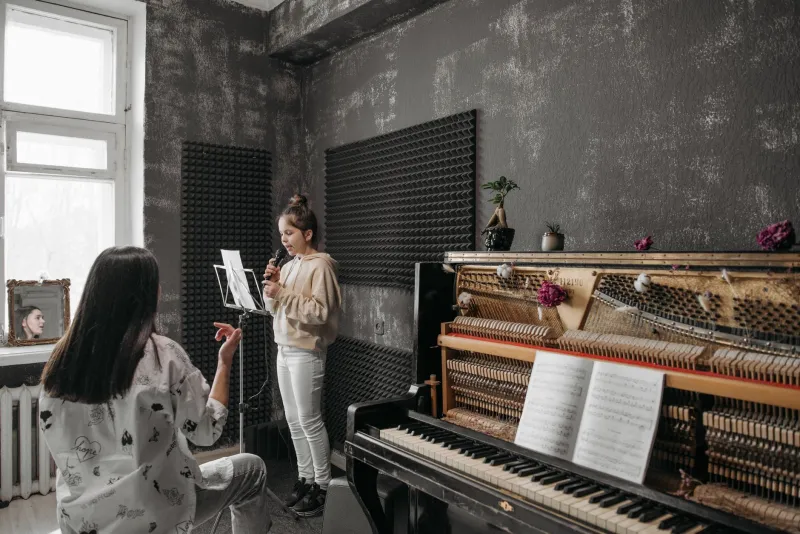
Studio, Soundproofing, and Sheet Music: What Piano Teachers Can (and Can't) Deduct

Tax season has a funny way of making even the most confident piano teacher feel like a complete beginner. You know your scales, you know your pedagogy, but IRS Publication 587? That's a different kind of sight-reading challenge.
If you're running a private piano studio — whether it's out of a spare bedroom, a dedicated addition, or a rented space — there's real money sitting on the table in the form of deductions you might be leaving behind. There's also a handful of gray areas that could raise eyebrows if you're not careful. Let's walk through both.
The Home Studio Deduction: Powerful, but Precise
The home office deduction is probably the biggest opportunity for piano teachers who work from home — and also one of the most misunderstood.
To qualify, the IRS requires that the space be used regularly and exclusively for your business. That word "exclusively" is doing a lot of heavy lifting. If your teaching room doubles as a guest bedroom, a storage space for holiday decorations, or anywhere your kids do homework, it likely doesn't qualify. But if that room is genuinely your studio — students come in, you teach, and nothing else happens in there — you're in solid territory.
You have two calculation options:
- Simplified method: Deduct $5 per square foot, up to 300 square feet (max $1,500/year). Easy math, less documentation.
- Regular method: Calculate the percentage of your home used for business (studio square footage ÷ total home square footage) and apply that to actual home expenses like mortgage interest, utilities, insurance, and repairs. More paperwork, but often a bigger deduction.
For teachers with larger studios or high utility bills, the regular method frequently comes out ahead. Just make sure you're keeping records — floor plans, photos, and receipts are your friends here.
What About Soundproofing?
This is where things get interesting — and where a lot of piano teachers make costly assumptions.
Say you spent $4,000 adding acoustic panels, mass-loaded vinyl, and a new door seal to your studio. Is that deductible? Yes — but how it's deductible depends on what you did.
Routine improvements that don't add significant value to your home (like hanging foam panels or installing door sweeps) can typically be deducted as business expenses in the year you pay for them. But structural improvements — think adding a room, building a soundproofed addition, or replacing windows with specialized acoustic glass — those are capital improvements. The IRS wants you to depreciate those costs over time, not write them off all at once.
The line between a "repair" and an "improvement" is genuinely blurry, and it's one of the most common spots where self-employed people get tripped up. When in doubt, talk to a CPA who works with self-employed creatives or musicians. It's worth the hour.
Your Piano Is a Business Asset
If you use your piano primarily for teaching, it's a depreciable asset — not just a piece of furniture. The IRS lets you recover the cost of business property over time through depreciation, and under Section 179, you may be able to deduct the full cost of qualifying equipment in the year you buy it, rather than spreading it across multiple years.
For a piano purchased specifically for your studio, this can be a meaningful deduction. A $6,000 upright bought for student use? That's a legitimate business expense, not a personal indulgence.
A few things to keep in mind:
- Document when and why the piano was purchased for business use.
- If you use the same piano for personal practice and teaching, you'll need to calculate a business-use percentage and only deduct that portion.
- Keep the receipt, any appraisals, and records of when students started using it.
Sheet Music, Subscriptions, and Supplies
This one's refreshingly straightforward. Sheet music, method books, theory workbooks, and music subscriptions (like apps or digital sheet music platforms) used for teaching are fully deductible business expenses. Same goes for pencils, student reward stickers, printer ink for scales you print out, and any other consumables that exist because of your teaching practice.
Don't overlook professional development either. Workshops, masterclasses, pedagogical conferences, and even relevant books about music education are all fair game. The IRS allows deductions for education that maintains or improves skills required in your current work — and for a piano teacher, that covers a lot of ground.
Recital Costs: Yes, These Count
Hosting a student recital isn't just a nice tradition — it's a legitimate business expense. Venue rental fees, piano tuning costs specifically for the event, programs you print, and even refreshments you provide can all be deductible.
The key is keeping everything documented. Save the venue invoice. Note the date and business purpose on every receipt. If you're hosting the recital at your home, you can deduct direct costs (like renting chairs or a sound system) but not a portion of your mortgage — that's already accounted for in your home office deduction.
One area to be careful with: gifts or awards for students. The IRS caps the deduction for business gifts at $25 per recipient per year. So that $75 gift card to a graduating senior? Only $25 of it is deductible.
Travel and Vehicle Expenses
Do you drive to students' homes, to a rented studio space, or to pick up supplies for your teaching business? Those miles matter.
For 2024, the IRS standard mileage rate for business use is 67 cents per mile. Keep a mileage log — even a simple spreadsheet with date, destination, and purpose does the job. Apps like MileIQ or Everlance can automate this if you'd rather not track manually.
Note: commuting from your home to a separate studio location is generally not deductible. But driving from your home studio to a student's house, or from one teaching location to another, typically is.
What Actually Triggers an Audit?
Honestly, most piano teachers are too conservative with their deductions, not too aggressive. But a few patterns do tend to attract IRS attention:
- Claiming 100% business use of a vehicle when you clearly use it personally too
- Large home office deductions relative to your reported income
- Inconsistent income reporting — especially if you take cash payments and don't report them all
- Deducting personal expenses as business costs (that vacation where you happened to attend one music workshop doesn't make the whole trip deductible)
The fix for all of these is the same: documentation, documentation, documentation. Keep records like someone is going to ask you to prove everything — because occasionally, they will.
The Bottom Line
Teaching piano is a real business, and the tax code has real tools to help you run it more profitably. The home studio deduction, instrument depreciation, recital expenses, and professional development costs are all legitimate write-offs that too many teachers ignore because the rules feel complicated.
They are a little complicated — but not impossibly so. A good CPA who understands self-employment (ideally one with arts or creative industry experience) can help you build a tax strategy that's both aggressive and defensible. Think of it as an investment in your studio, not just a bill you pay once a year.
You've already put in the work to build something worth protecting. Make sure your finances reflect that.