Home Studio, Hidden Tax Bomb: What Piano Teachers Don't Know About Selling Their House
Let's be honest: most piano teachers who claim a home office deduction do it because their accountant said it was a good idea. And it usually is — right up until it isn't. The problem isn't the deduction itself. The problem is what happens years down the road when you decide to sell your home, move the studio, or retire from teaching altogether. That's when a perfectly legal tax strategy can quietly turn into a five-figure surprise.
This isn't meant to scare you away from legitimate deductions. It's meant to make sure you understand the whole picture before you commit to a path that's harder to reverse than it looks.
The Basics Are Probably Fine — It's What Comes After That Gets Messy
If you're teaching piano lessons out of a dedicated room in your home, the IRS does allow you to deduct a portion of your housing expenses. We're talking mortgage interest, utilities, insurance, repairs — the works. You calculate what percentage of your home's square footage is used exclusively for business, and that percentage applies to those costs.
Sounds clean and simple. And for the first few years, it really is. You file your Schedule C, claim the deduction, and lower your taxable income. Great.
But there's a mechanic buried inside that deduction that most teachers don't fully register: depreciation.
When you claim a home office, the IRS requires you to depreciate the business-use portion of your home over 39 years (the standard for commercial property). Even if you never explicitly claim that depreciation deduction, the IRS treats it as if you did. This is called "allowed or allowable" depreciation, and it matters enormously when you eventually sell.
What Depreciation Recapture Actually Means for You
Here's the scenario. You've been teaching piano from your dedicated studio room for 12 years. You've claimed depreciation each year on that portion of your home's value. Now you're ready to sell.
For most homeowners, the IRS offers a generous exclusion: up to $250,000 in capital gains on the sale of a primary residence (or $500,000 if you're married filing jointly). That exclusion has saved millions of American families from a hefty tax bill when housing prices rose.
But that exclusion doesn't fully apply to the business-use portion of your home. The depreciation you claimed — or that the IRS says you could have claimed — gets "recaptured" and taxed as ordinary income, up to a maximum rate of 25%. This recapture happens regardless of the capital gains exclusion.
Let's put numbers to it. Say your home appreciated significantly over the years and the portion of the house you used as your piano studio is worth $40,000 more than when you bought it, after accounting for depreciation. That gain on the business-use portion doesn't get sheltered the way the rest of your home's gain does. You could owe taxes on a chunk of money you didn't even realize was sitting in a taxable bucket.
The "Exclusive Use" Rule Is Stricter Than You Think
Another layer that trips people up: the IRS requires that your home office space be used exclusively and regularly for business. Not mostly. Not primarily. Exclusively.
For piano teachers, this creates some genuinely awkward situations. Does your student waiting area double as your living room? Does your studio also serve as a guest bedroom when your in-laws visit? Even occasional personal use of the space can disqualify the entire deduction — and if you've been claiming it anyway, that's a problem if you're ever audited.
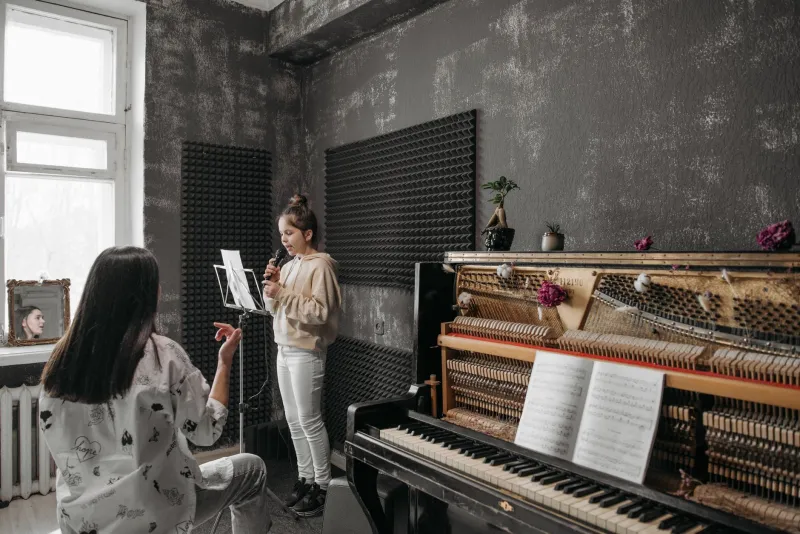
The good news is that a dedicated, walled-off studio with its piano, bench, and music stands — and nothing else — usually passes muster. But "the corner of my living room where my upright piano lives" almost certainly doesn't.
Mixed-Use Spaces and the Partial Deduction Trap
Some teachers try to split the difference by claiming a partial deduction on a space that has both personal and professional use. The IRS doesn't really allow this for the home office deduction specifically — it's all or nothing on the exclusivity requirement. However, individual items within the space (like the piano itself, or sheet music, or recording equipment) can sometimes be deducted separately as business assets, even if the room doesn't qualify as a dedicated home office.
This is where working with a tax professional who actually understands self-employment and home-based businesses pays for itself. A general accountant who doesn't deal with this specific scenario regularly may not flag the nuances.
What Happens If You Rent Instead of Own?
Teachers who rent their home are in a somewhat simpler position. You can still claim the home office deduction based on your rent and utilities, but there's no depreciation of real property to worry about, and no capital gains interaction when you eventually move. The deduction is cleaner, and the long-term complications are fewer.
That said, renters should still make sure they meet the exclusive-use test and document their studio space carefully — photos, floor plans, and lease agreements that support the business use of the space can all be helpful if questions arise.
Practical Steps to Protect Yourself
None of this means you should avoid the home office deduction. For many piano teachers, it's a meaningful reduction in their tax burden, and walking away from it isn't the answer. But there are smart ways to manage the risk.
Track your depreciation carefully. Every year you claim a home office, document the depreciation amount. When you eventually sell, you'll need this figure to calculate your recapture liability accurately.
Talk to your tax professional before you sell — not after. If you know a sale is coming in the next year or two, bring it up now. There are sometimes strategic options for managing the tax impact that require advance planning.
Consider whether the deduction still makes sense for your situation. If you're planning to sell your home in the near future, or if your teaching income is relatively modest, the long-term tax cost of depreciation recapture might outweigh the annual deduction benefit. That's a math problem worth running with a pro.
Keep your studio space genuinely separate. The more clearly you can demonstrate that the room is used only for teaching, the stronger your position if the deduction is ever questioned.
The Bottom Line
Running a piano studio from your home is one of the most common and financially sensible setups for independent music teachers across the country. The tax benefits are real. But the system is more interconnected than it appears on the surface, and decisions you make in year one can have consequences you won't feel until year fifteen.
The piano business rewards people who plan ahead — whether that's choosing the right instrument for your students, scheduling recitals early, or understanding exactly what your home office deduction is going to cost you when it's time to move on. A little homework now can save you a lot of heartburn later.