Your Tablet Has 10,000 Scores. Your Practice Log Has Three Songs.
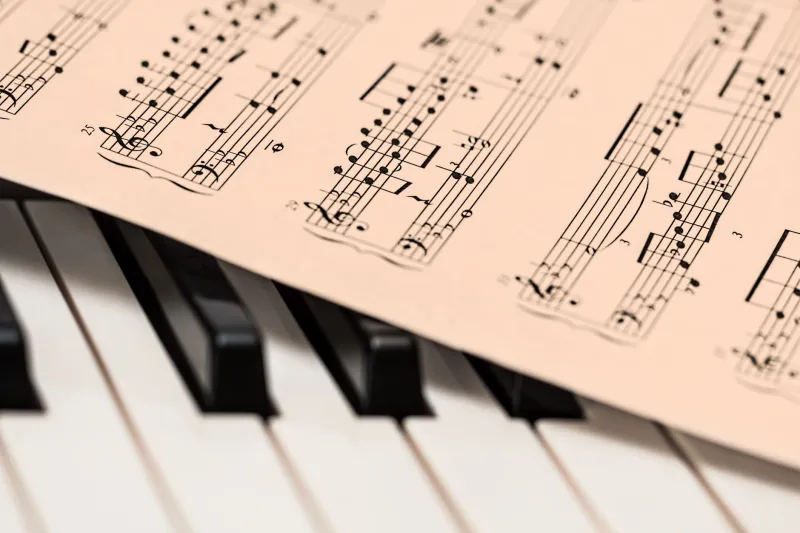
Open the tablet of almost any amateur pianist in America right now and you'll find the same thing: a digital library with hundreds — sometimes thousands — of scores. Chopin nocturnes downloaded on a whim. A complete Bach Well-Tempered Clavier grabbed during a free trial. Forty arrangements of pop songs for that one wedding that already happened.
Now ask that same pianist what they're actually practicing. Crickets.
The All-You-Can-Eat Problem
Ten years ago, getting sheet music took effort. You ordered from a publisher, waited a week, drove to a music store, or begged your teacher for a photocopy. That friction did something unexpected: it made you commit. If you spent $18 on the Henle edition of a Chopin ballade, you were going to learn that ballade.
Today, a $10-a-month subscription hands you essentially everything IMSLP and the major publishers can license. Unlimited access sounded like liberation. What it actually produced, according to a lot of frustrated teachers, is a generation of browser-tab musicians — pianists who sample, skim, and abandon repertoire the way teenagers scroll TikTok.
"I've had students show up with twenty new pieces on their iPad and nothing learned past the first eight bars," says one independent teacher in Ohio, who asked us to describe the pattern she sees weekly. "The downloading feels like progress. It isn't. It's shopping."
Psychologists have a name for adjacent behavior: collection as consumption. Acquiring the score delivers a little hit of accomplishment, and that hit quietly satisfies the part of your brain that was supposed to be motivated to practice. You feel like you've started, so the urgency to actually start evaporates.
The Case for Paper (Yes, Still)
Here's the uncomfortable part: a lot of working pianists and teachers have quietly gone back to printed scores, at least for repertoire they're serious about.
The reasons aren't nostalgic, they're practical:
- Page turns. A tablet requires tapping or a pedal; a well-opened book just lies there.
- Annotation. Scribbling fingerings, circling tricky intervals, drawing the little arrows that mean "don't rush, you always rush here" — pencil on paper still beats stylus on glass for speed and permanence.
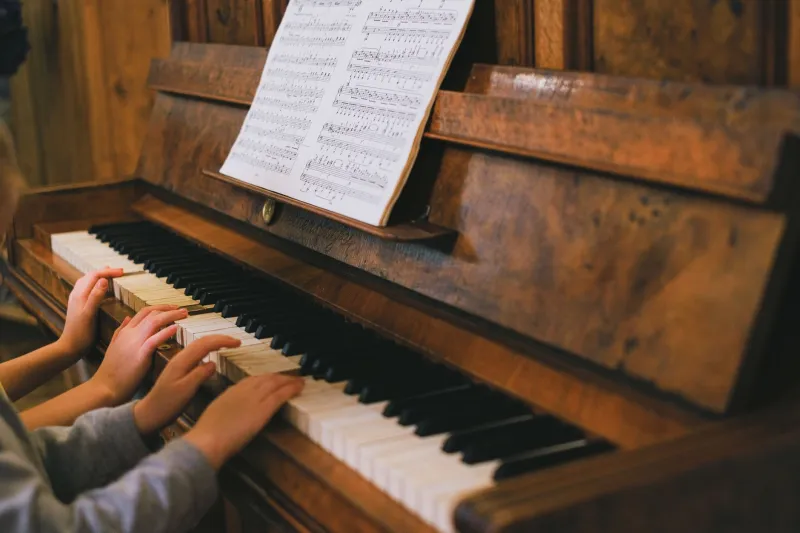
- Visibility. A printed score on the music stand of an upright in the living room is a standing invitation to play. A file inside an app requires unlocking a device that also contains your email, your texts, and every distraction ever invented.
- Commitment psychology. A physical binder of learned pieces is a trophy case. A folder of PDFs is a junk drawer.
None of this means tablets are bad. For gigging musicians, church pianists, and anyone sight-reading through a hymnal's worth of material on a weekly basis, digital is genuinely superior. The failure mode isn't the format — it's the unlimited library combined with zero curation.
Curating a Library You'll Actually Use
If you're going digital, treat your library like a garden, not a warehouse. Teachers we spoke to suggested a simple three-tier system:
Tier 1: Active repertoire. Two to four pieces, maximum, currently in progress. These get printed or pinned. Everything else is invisible while you work.
Tier 2: The queue. Maybe ten pieces you genuinely intend to learn this year. If a new download isn't better than something in the queue, it doesn't get added. This is the rule everyone breaks, and it's the only rule that matters.
Tier 3: The archive. Reference material, seasonal arrangements, that one jazz transcription you'll pull out at Christmas. Fine to have. Fine to forget about.
The trick is a hard wall between Tier 1 and everything else. Some pianists go as far as keeping a dedicated practice tablet with only active pieces installed — the musical equivalent of deleting social media from your phone.
What Teachers Are Actually Doing About It
Smart instructors have started building the cure into their lesson structure. Some assign "one piece per month, printed, no substitutions." Others require students to bring a paper copy to lessons for anything beyond sight-reading exercises. A few have flipped the model entirely: students get a monthly allowance of one new score, chosen deliberately, which restores just enough scarcity to make selection meaningful.
The consensus from the teaching side is blunt: repertoire-building is a skill, and unlimited libraries removed the training wheels that forced us to develop it. Choosing what to learn — and sticking with it past the awkward middle section — is where real pianists are made.
So here's the challenge for this week: open that PDF library, count the files, and count the pieces you've actually finished. Then pick one. Print it if you have to. Play it to the end before you're allowed to download anything else.
Your tablet will still have 10,000 scores waiting when you're done. You'll just be a pianist who can finally play one of them.