Four Hands, One Bench, Zero Mercy: Why Every Pianist Should Be Forced to Play Duets
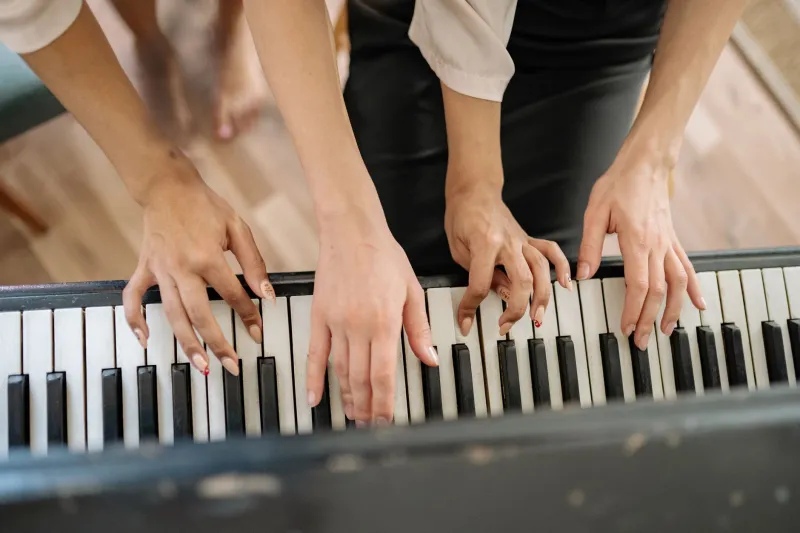
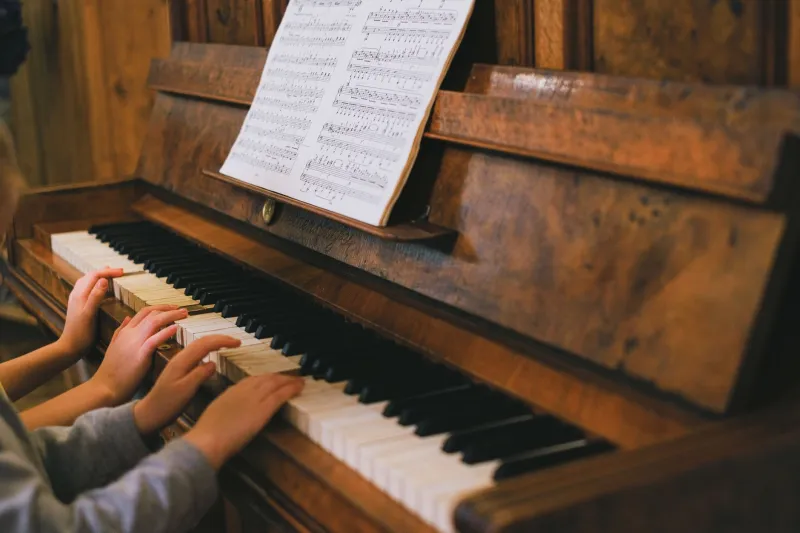
Let's be honest about what usually happens when two pianists share a keyboard: someone plays too loud, someone drags the tempo, and someone — it's always someone — quietly takes over the pedal like they're the only adult in the room. Piano duets are beautiful. Piano duets are also a personality test with 88 keys.
And that's exactly why more pianists should be playing them.
The Metronome That Yells Back
Ask piano teachers about the fastest cure for sloppy rhythm and you'll hear the same answer over and over: put the student on the second part of a duet. Not a click track. Not an app. Another human being who will notice — immediately and audibly — when you rush the transition into the B section.
A metronome corrects you passively. A duet partner corrects you with a look. There is no motivator on earth quite like knowing that if you come in late, the whole texture collapses and your friend on the primo part has to cover for you in real time. Ensemble playing builds an internal clock in a way solo practice with a click never quite manages, because you're not playing to a beat — you're playing with a person.
Teachers also love duets for a sneakier reason: they sneak real musicianship into students who think they're just having fun. Dynamics become negotiation. Balance becomes an act of generosity — the secondo part exists to make the primo sound good. Try teaching that concept to a solo student absorbed in their own part. Try not teaching it to two kids who can hear their partner disappear under their heavy left hand.
A Field Guide to Bench Etiquette
Four-hand playing has unwritten rules, and violating them is how sibling duets turn into cold wars. A few for the record:
- The pedal belongs to the secondo. Traditionally, the lower part handles pedaling since they're playing the harmonic foundation. If you're on primo and you keep reaching for the pedal, you're not helping. You're trespassing.
- Primo sits right, secondo sits left. This isn't a suggestion. The geometry of the keyboard demands it, and crossing arms at the wrong moment is how duets turn into wrestling matches.
- Rehearse the handoffs. The places where one player takes over a figure from the other are where duets go to die. Drill them separately, at half tempo, until they're boring.
- Nobody is the boss. The fastest way to kill a duo partnership is one player treating the other as an accompanist. Discuss tempo choices, disagree politely, and rehearse the disagreement like everything else.
- Page turns are a two-player job. Plan them. Practice them. Apologize profusely when you flub them anyway.
Where to Start: Five Approachable Four-Hand Pieces
You don't need to jump straight into Schubert's Fantasia in F minor (though once you're ready, it's one of the greatest things ever written for one piano, four hands). Start here:
- Johannes Brahms — Hungarian Dances (Nos. 5 and 6 are the crowd-pleasers). Originally for four hands, endlessly satisfying, and the secondo parts groove hard.
- Antonín Dvořák — Slavonic Dances, Op. 46. Written for piano duet first, orchestrated later. Rhythmic, dramatic, and forgiving at moderate tempos.
- W.A. Mozart — Sonata in D major, K. 381. Classical, clean, and a masterclass in trading phrases back and forth.
- Robert Schumann — Bilder aus Osten. Underrated, gorgeous, and friendlier than it looks.
- Anything from a modern pop or film duet collection. Seriously. Teachers use these constantly, and there's no shame in bonding with a friend over a well-arranged movie theme before tackling Brahms.
The Adult Version: Duo Therapy
Here's the part nobody talks about: duets aren't just for kids at recitals. Community music schools around the country have watched adult amateur partnerships become the glue that keeps grown-ups practicing. It's accountability with a smile — you can cancel on yourself indefinitely, but cancelling on Diane from Tuesday duo night is a different story.
Adults who play four hands report the same things: faster progress, sharper listening, and an oddly deep friendship built entirely at one keyboard. There's something about shared timing — literally breathing and leaning together — that solo practice can't replicate.
So find a partner. Split the bench. Argue about the pedal. Get better.
Just maybe rehearse the handoffs first.