Clicking Toward Nowhere: How Misusing the Metronome Is Actually Wrecking Your Piano Playing
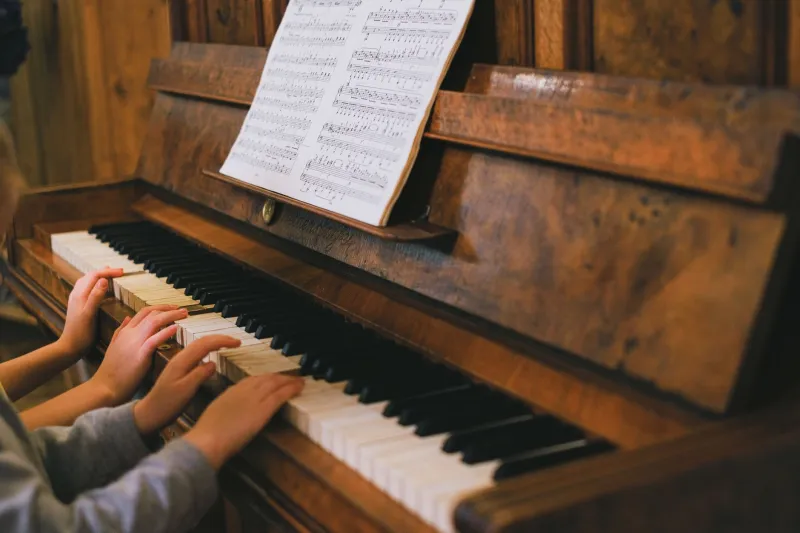
There's a piece of advice that gets handed down from teacher to student like a family heirloom: always practice with a metronome. Set it slow, bump it up a few BPM at a time, and eventually you'll get fast. Clean. Performance-ready. It sounds completely logical. And for a huge chunk of the piano-playing population in the US, it's become gospel.
The problem? For a lot of players, it's quietly doing the opposite of what they think.
This isn't about throwing your metronome in the trash. It's about understanding what it actually does to your nervous system — and why using it wrong can lock you into tension, rigidity, and a kind of mechanical playing that never quite sounds alive.
The Brain Doesn't Learn Tempo the Way You Think
When you sit down and drill a passage at 60 BPM, then 65, then 70, you're essentially asking your brain to learn the same movement over and over at slightly different speeds. Sounds efficient, right? But here's the catch: research in motor learning — the field that studies how humans acquire physical skills — suggests that this kind of blocked, repetitive practice often creates shallow learning. Your fingers memorize a groove, not a skill.
Neuroscientists call this the "contextual interference effect." Basically, when practice is too predictable and too consistent, the brain stops working as hard. It coasts. The movement gets encoded, sure, but it gets encoded in a fragile way — one that can crumble the moment conditions change. Like, say, a recital stage with a slightly different piano action and a couple hundred people watching you.
Metronome-dependent practice can also train what some coaches call external timing — you're reacting to a sound outside yourself rather than generating rhythm from within. Over time, that can make playing without the click feel genuinely uncomfortable. Some students report a low-grade anxiety every time the metronome is off. That's not a coincidence.
Speed Is a Result, Not a Goal
Here's something elite pianists understand that casual practicers often miss: speed isn't something you chase directly. It's a byproduct of efficiency.
When a passage feels fast and effortful, the instinct is to practice it faster until it feels easy. But that logic is backwards. Difficulty at tempo usually signals unnecessary tension somewhere — in the wrists, the forearms, the shoulders, even the jaw. Cranking up the metronome while that tension is present just bakes it in deeper.
What actually unlocks speed is getting the mechanics so relaxed and precise at a comfortable tempo that faster speeds become structurally available. You're not grinding toward 120 BPM. You're building the physical architecture that makes 120 BPM feel natural.
Many top-level coaches — including those at major US conservatories — spend a surprising amount of lesson time slowing students way down. Not metronome-slow. Think-about-every-single-motion slow. The kind of slow where you can feel exactly what each finger is doing and consciously release any grip or lock in the hand. That quality of attention is what builds genuine technique.
When the Click Actually Helps
Okay, to be fair — the metronome absolutely has a place in serious practice. The issue isn't the tool. It's the application.
Using a metronome makes a lot of sense when:
- You're checking your consistency. If you suspect you're rushing or dragging in certain spots, the metronome gives you honest feedback. It doesn't lie.
- You're working on rhythm accuracy in early learning. For a brand-new piece, especially one with tricky rhythmic patterns, the click helps you internalize the structure before you start interpreting it.
- You're doing technical exercises. Scales, arpeggios, Hanon — repetitive technical work benefits from a steady pulse because the goal there really is consistency.
- You're playing with others. Ensemble playing demands lockstep timing, and the metronome is a great training partner for that.
The trouble starts when players use it as a speedometer — treating every practice session like a race to a higher BPM number. That turns practice into a performance of progress rather than actual skill-building.
What Elite Pianists Do Instead
If you watch videos of professional pianists talking about their practice routines, a few things come up again and again that don't involve a metronome at all.
Rhythmic chunking. Playing a passage in different rhythmic groupings — dotted rhythms, uneven accents, exaggerated articulations — forces the brain to process the notes in new ways each time. It's the opposite of blocked repetition. The passage stays the same, but the approach keeps changing, which keeps the brain engaged and builds more resilient muscle memory.
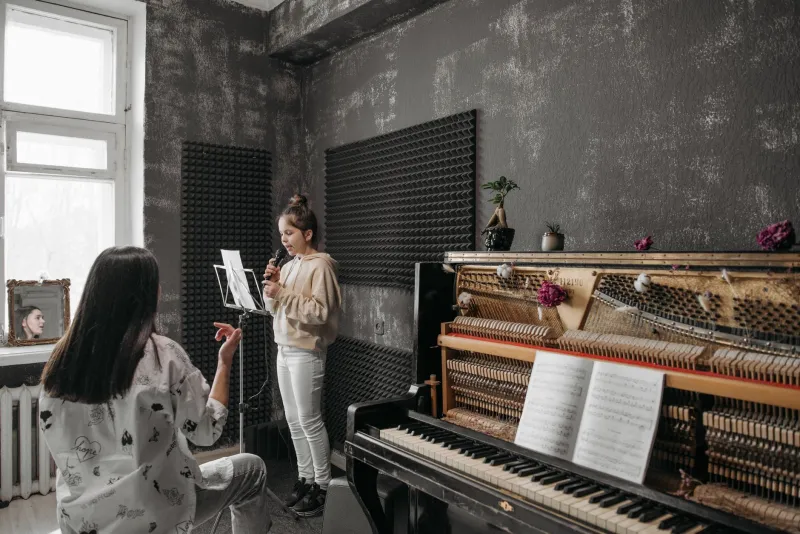
Singing and internal pulse. A lot of advanced players will sing or hum a passage before playing it, or tap the rhythm on their lap. This builds what's called internal rhythmic representation — a felt sense of the music's pulse that lives inside you, not in a device on the piano.
Variable tempo practice. Instead of gradually increasing tempo, try playing a passage fast, then slow, then medium, then fast again — with no metronome. This randomizes the tempo demand and forces the brain to recalibrate each time, which is exactly the kind of challenge that creates durable learning.
Full-speed bursts. Counterintuitively, playing a short passage at (or even slightly above) target tempo — just for a few seconds — can give your nervous system a map of what you're aiming for. It's not about perfection. It's about previewing the destination.
Rethinking Your Practice Sessions
If you've been a strict metronome devotee, none of this means you need to overhaul everything overnight. But it might be worth experimenting.
Try taking one piece you've been grinding on and putting the metronome away for a week. Work through it slowly — not click-slowly, but consciously slowly. Notice where tension creeps in. Focus on what your hands feel like, not what the BPM counter says. Then play sections fast and loose, without judgment, just to feel the motion.
You might be surprised what loosens up.
The metronome is a useful tool in the right hands, used at the right moments. But it was never meant to be the whole practice philosophy. Music is a human thing — it breathes, it flexes, it responds. Training yourself to chase a click can actually work against the very qualities that make piano playing worth listening to.
Slow down, tune in, and let the speed come to you. That's not a soft approach. That's the smart one.